The Challenge
Managing a large vehicle fleet is hard. Managing one that operates inside regulated mining zones — where government authorities require precise records of every vehicle movement, entry and exit timing, and automated compliance reporting — is a different problem entirely.
The client operated across Andhra Pradesh, Telangana, Karnataka, and Tamil Nadu. Their existing system struggled with delayed GPS updates, inconsistent data availability, and no support for the compliance workflows that mining operations legally require. Fleet owners needed real-time visibility. Government agencies needed accurate vehicle movement records for challan generation and operational oversight. Neither group was being served.
Off-the-shelf fleet management tools couldn't bridge this gap. The platform needed to handle large-scale fleet tracking and region-specific compliance workflows simultaneously — from a single system that worked reliably across thousands of vehicles, around the clock.
What We Built
Real-Time Vehicle Monitoring Infrastructure
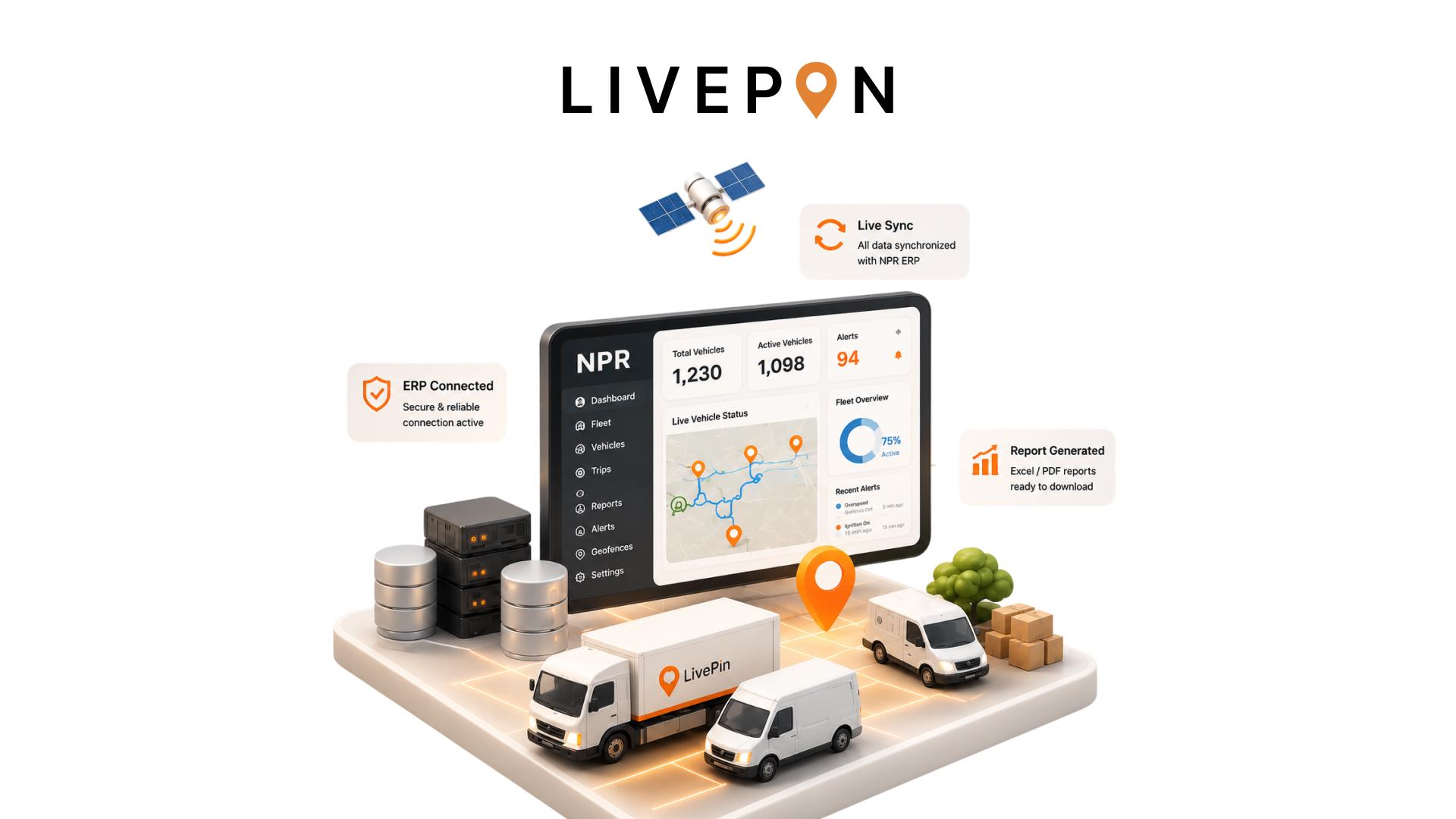
The foundation of LivePin is a high-throughput tracking infrastructure that processes GPS data from thousands of vehicles at the same time. Location updates flow in continuously from IoT tracking devices and surface as near real-time vehicle positions on a centralized dashboard.
The architecture was built to hold its performance under peak load — fleet operators always see current vehicle locations and full movement history, regardless of how many devices are active at once.
Mining Compliance and Automated Challan Support
This was the most critical requirement. We built a compliance layer that automatically captures vehicle entry and exit events at mining zone boundaries and transmits the records securely to centralized servers.
The result: government authorities get accurate, timestamped movement records without any manual intervention from fleet operators. Compliance stops being a burden and becomes a background process. Vehicle owners stay within legal requirements without building a separate reporting workflow.
Threat Detection and Fleet Security
LivePin includes a real-time alerting engine that watches for anomalies across every connected vehicle. When suspicious activity occurs — unexpected movement, a vehicle leaving a designated zone, a security exception — the system generates an alert immediately.
These alerts reach operators through both the web dashboard and the mobile app, so response doesn't depend on being at a desk. The goal was to help fleet managers act before an incident escalates rather than review logs after the fact.
Unified Fleet Management Dashboard
We replaced the fragmented view operators previously worked with — multiple tools, no single source of truth — with a dashboard that surfaces everything in one place. Vehicle status, live locations, active alerts, and operational data are all accessible from a single interface.
The dashboard was designed for speed. A fleet manager should be able to identify a problem and act on it in seconds, not minutes, without needing training to navigate the system.
Reporting, Analytics and Mobile Access
We built one-click report generation that produces downloadable operational summaries covering vehicle activity, compliance status, and business performance. Operators no longer need to manually compile data from separate systems.
Alongside the web platform, we shipped a mobile application that keeps critical fleet information accessible in the field. Data synchronization handles inconsistent connectivity — a real constraint for vehicles operating in remote mining regions where coverage is unpredictable.
Building all of this required solving hard engineering problems simultaneously: processing millions of GPS events with low latency, maintaining persistent communication with IoT devices, handling offline sync, supporting multi-tenant architecture, and meeting strict uptime and security requirements.
Results
- 95,000+ active vehicles connected and monitored through the platform
- 22,000 GPS events processed per second, enabling large-scale real-time tracking
- 60% reduction in vehicle theft incidents through proactive monitoring and real-time alerting
- 11 enterprise clients onboarded within the first 6 months of deployment
- 99.95% platform uptime, ensuring uninterrupted fleet visibility and operational continuity